Cost Efficiency
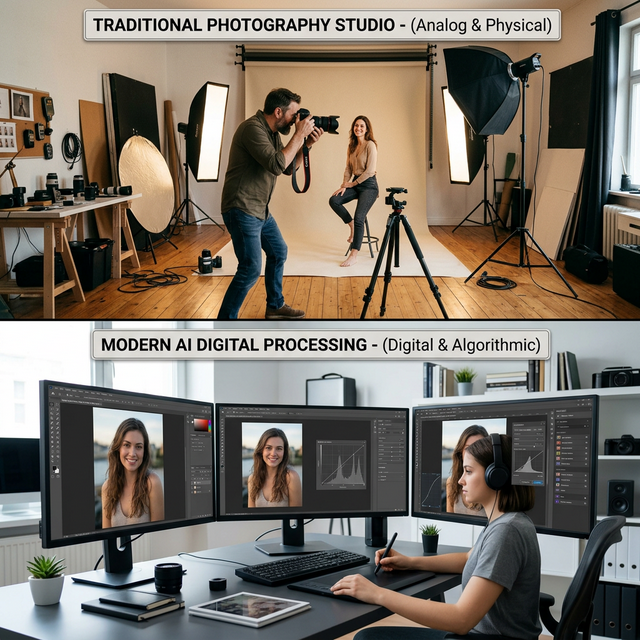
Traditional photography includes the photographer, scheduling, location, lighting, editing, and often multiple revision cycles. Those layers create a premium experience, but they also increase price quickly.
AI headshots reduce that overhead by replacing much of the manual workflow with a trained generation pipeline. That makes professional-looking imagery available at a lower price point.
Convenience and Accessibility
A conventional shoot can produce excellent work, but it demands coordination, travel, and time. AI headshot generation compresses that process into an upload-and-review workflow that can be completed from home or the office.
That convenience matters when you are hiring at scale, updating an entire team page, or simply need a polished image on short notice.
Quality and Customization
Traditional photography still offers the nuance of a human photographer directing posture, expression, and environment in real time. AI, however, has improved enough to be a serious alternative for many business use cases.
Modern AI systems can deliver sharp, consistent portraits with customizable styling, especially when the inputs are strong and the use case is a professional online profile rather than a highly artistic campaign.
The Verdict
The choice depends on priorities. If you want handcrafted art direction or a high-touch brand shoot, traditional photography remains valuable. If you want speed, affordability, and a professional result for digital presence, AI headshots are often the more pragmatic option.
For many professionals, the best framing is not AI versus photographers in absolute terms. It is which workflow matches the quality bar, budget, and turnaround required for the job.